
Your Perception Shapes Your Reality: Why Mindset Matters More Than Circumstance
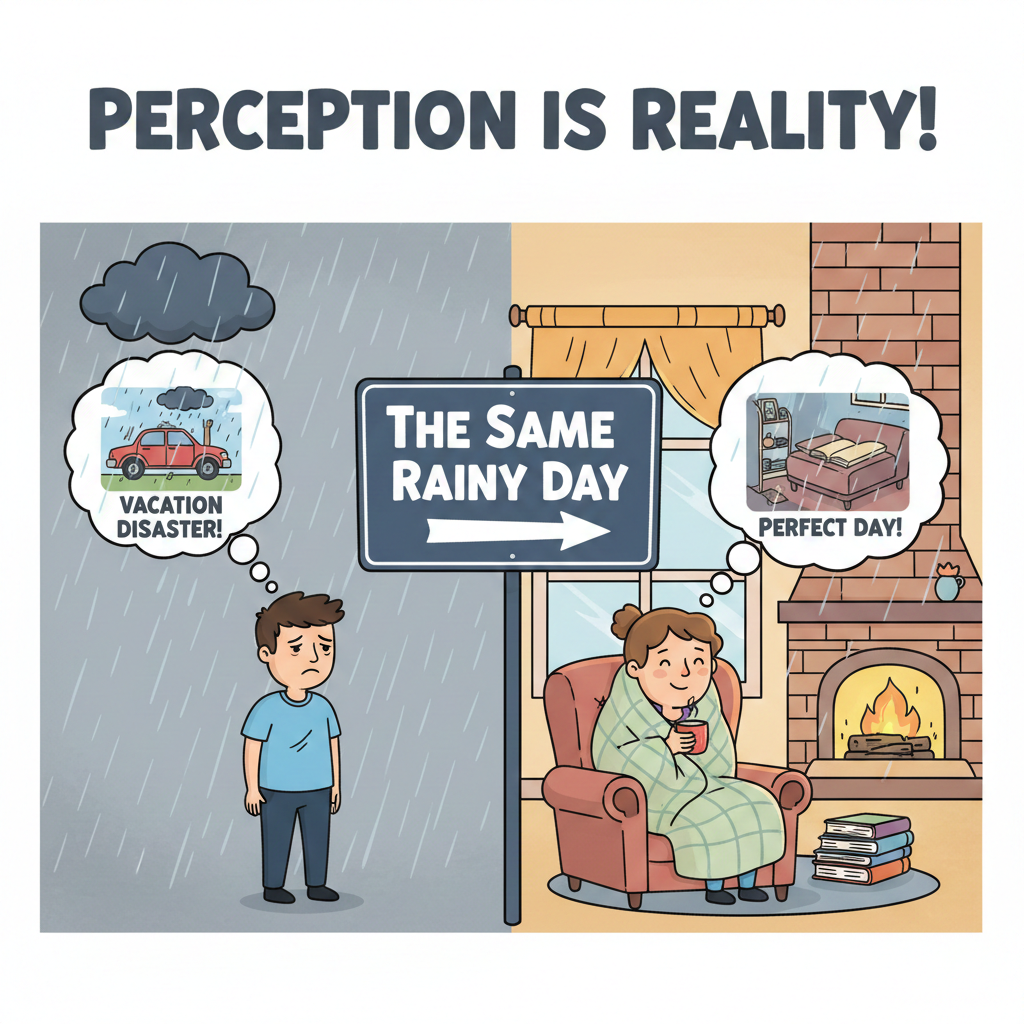
Have you ever noticed how two individuals can go through the exact same experience and yet walk away with wildly different reactions, feelings, and even memories? Imagine a rainy vacation day: one person might lament the washout, feeling utterly miserable, while another embraces the opportunity for a cozy day indoors, reading a book or playing board games. The external circumstance. The rain. Is identical. The internal experience, however, is shaped entirely by their perception.
This isn't just a quirky human tendency; it's a fundamental truth that underpins our emotional well-being, our resilience, and ultimately, the quality of our lives. The idea "perception is reality" isn't merely a catchy phrase; it's a profound statement about the power of our minds. Our perspective doesn't just color our world; it actively constructs it.
How Perspective Determines Emotional Outcomes
At its core, perspective is the lens through which we view and interpret events, people, and ourselves. This lens is incredibly powerful, dictating our emotional responses long before conscious thought often kicks in. Consider a challenging work project. One employee might perceive it as an overwhelming burden, leading to stress, anxiety, and procrastination. Another might see it as an exciting opportunity to learn new skills, tackle a complex problem, and demonstrate their capabilities, leading to engagement and motivation.
The difference isn't in the project itself, but in the internal narrative each person constructs around it. This internal narrative is profoundly influential. Research consistently demonstrates that our cognitive appraisals of events directly impact our emotional states. For instance, studies in cognitive psychology have long highlighted the role of appraisal in stress responses. Lazarus and Folkman's (1984) transactional model of stress and coping, while not recent, laid a foundational understanding that stress isn't merely a response to a stressor, but rather the result of an individual's appraisal of the stressor and their perceived ability to cope with it. More contemporary research continues to build on this. A 2011 study by Gross and Thompson, for example, explores emotion regulation strategies, emphasizing how reappraisal (a form of altering one's perception) can effectively mitigate negative emotional experiences.
In essence, our emotions aren't just happening to us; they are, to a significant extent, happening because of how we interpret what's happening around us.
The Influence of Beliefs, Values, and Experiences
So, what shapes this powerful lens of perception? It's a complex interplay of several deeply ingrained factors: our beliefs, values, and past experiences.
Beliefs are the fundamental assumptions we hold about ourselves, others, and the world. If you believe the world is inherently hostile, you're likely to interpret ambiguous situations as threatening. If you believe you are capable and resourceful, you'll approach obstacles with a problem-solving mindset rather than despair. A 2008 article by Dweck on "Mindsets: The New Psychology of Success" (which, while a book, builds on decades of peer-reviewed research) vividly illustrates this with the concept of fixed vs. growth mindsets. Individuals with a growth mindset, believing their abilities can be developed, perceive challenges as opportunities for learning. Those with a fixed mindset, believing abilities are static, may perceive challenges as threats to their intelligence, leading to avoidance or defensiveness.
Values act as our internal compass, guiding our choices and interpretations. If you highly value security, an unexpected change might be perceived as destabilizing and anxiety-provoking. If you value adventure and novelty, that same change might be seen as an exciting new chapter. Our values determine what we pay attention to, what we prioritize, and how we judge situations as "good" or "bad."
Past experiences are perhaps the most potent sculptors of our perceptual lens. Every joy, trauma, success, and failure leaves an imprint, forming mental models and schemas that we unconsciously apply to new situations. Someone who has experienced repeated betrayals might be more suspicious of new relationships, perceiving innocuous actions as potential red flags. Conversely, someone who has consistently experienced support and kindness might approach new people with an open and trusting attitude. This is heavily explored in schema therapy (Young, Klosko, & Weishaar, 2003, though the foundations are older, continued research and application are ongoing), where early maladaptive schemas developed from adverse childhood experiences significantly influence how individuals perceive and react to current life events. The neural pathways formed through repeated experiences reinforce certain interpretations, making them feel like undeniable truths.
These factors don't operate in isolation; they intertwine to create a unique and complex perceptual framework for each individual. Understanding this interwoven influence is the first step towards consciously reshaping our reality.
The Art of Reframing Experiences for Growth
If our perception is largely shaped by our past and ingrained patterns, does that mean we are stuck with it? Absolutely not. The incredible plasticity of the human brain means we have the capacity to actively change our perspective through a process called reframing.
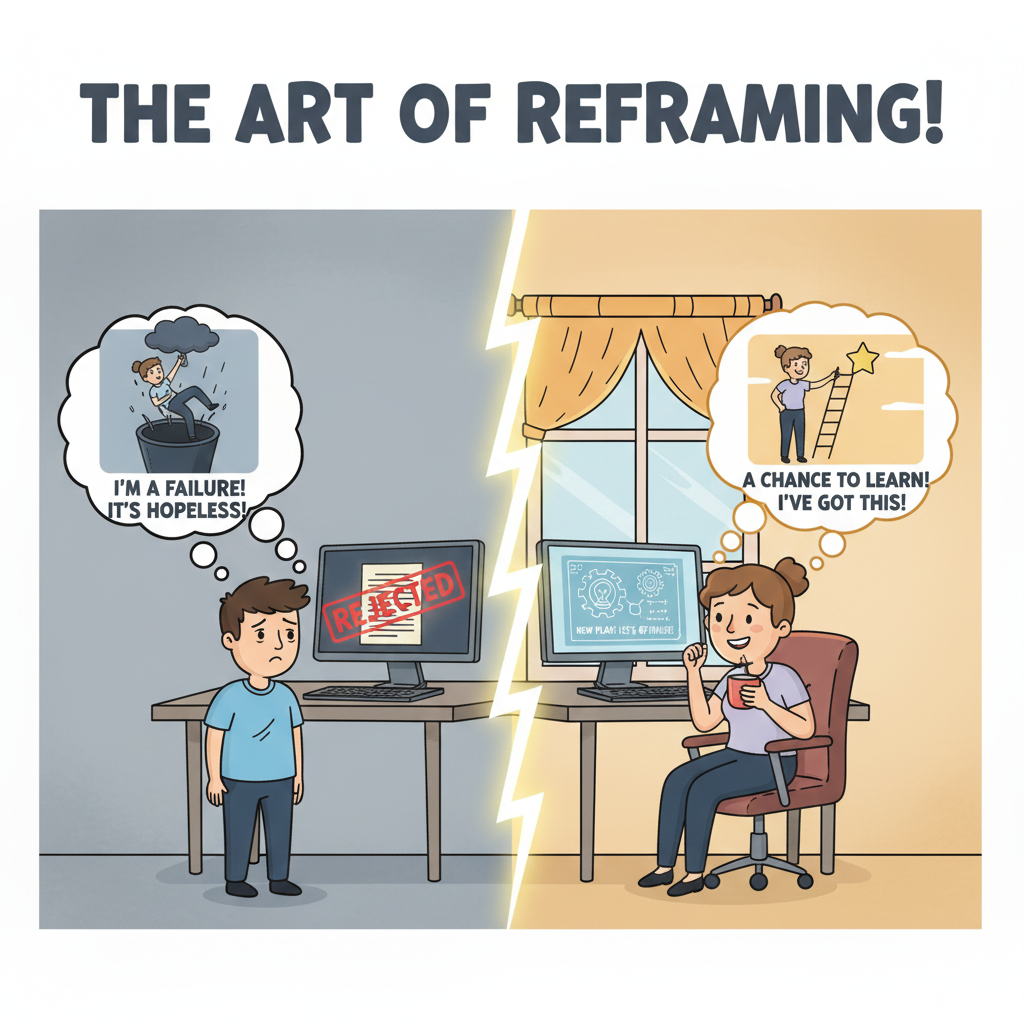
Reframing is the conscious act of looking at a situation, thought, or feeling from a different viewpoint, thereby altering its meaning and, consequently, our emotional response. It's not about denying reality or pretending things are fine when they're not. It's about finding alternative, often more constructive, interpretations.
For instance, receiving constructive criticism can be reframed from "I'm being attacked" to "This is an opportunity to improve." Losing a job can be reframed from "My life is over" to "This is a chance to explore a new career path or start my own venture." The event itself hasn't changed, but the story we tell ourselves about it has, and that makes all the difference.
Cognitive Behavioral Therapy (CBT), a widely researched and effective therapeutic approach, heavily utilizes reframing techniques. A 2013 meta-analysis by David, Cristea, and Hofmann in "Clinical Psychology Review" highlighted the efficacy of CBT, particularly its cognitive restructuring components, in treating various mental health conditions by helping individuals identify and challenge maladaptive thought patterns and perceptions. By consciously questioning negative or unhelpful interpretations, individuals can learn to adopt more balanced and realistic perspectives.
Here are some practical steps to cultivate the art of reframing:
Identify the Unhelpful Thought/Perception: What story are you telling yourself about a particular situation? Is it negative, self-defeating, or catastrophic?
Challenge the Thought: Ask yourself:
Is this absolutely true?
What's another way to look at this?
What evidence supports this thought, and what evidence contradicts it?
How would someone I admire perceive this situation?
Is this thought helping me or hindering me?
Find an Alternative Perspective: Actively seek out a different, more empowering or neutral interpretation. This might involve focusing on what you can control, identifying a lesson learned, or recognizing a potential opportunity.
Practice Gratitude: Regularly focusing on what you are grateful for can shift your overall perceptual bias towards positivity. A 2003 study by Emmons and McCullough showed that individuals who regularly practiced gratitude reported higher levels of positive emotions and life satisfaction.
Seek Diverse Viewpoints: Engage with people who have different experiences and perspectives. This can broaden your own understanding and challenge your ingrained assumptions.
The ability to consciously shift our perspective is not a panacea for all of life's challenges, but it is an incredibly powerful tool for navigating them with greater resilience and emotional intelligence. It allows us to transform potential obstacles into stepping stones, disappointments into lessons, and anxieties into opportunities for growth.
By understanding that our perception, not merely our circumstances, dictates our reality, we reclaim agency over our emotional lives. We learn that while we cannot always control what happens to us, we always have a choice in how we interpret and respond to it. This profound realization empowers us to cultivate a healthier, more balanced, and ultimately, a more fulfilling outlook on the world. The journey begins with a single shift in perspective, and that shift can change everything.
References and Future Reading
Academic References
David, D., Cristea, I., & Hofmann, S. G. (2013). Why cognitive behavioral therapy is the most widely used evidence-based psychotherapy. Clinical Psychology Review, 33(6), 793-802.
Emmons, R. A., & McCullough, M. E. (2003). Counting blessings versus burdens: An experimental investigation of gratitude and subjective well-being in daily life. Journal of Personality and Social Psychology, 84(2), 377–389.
Gross, J. J., & Thompson, R. A. (2011). Emotion regulation: Conceptual foundations. In J. J. Gross (Ed.), Handbook of emotion regulation (2nd ed., pp. 3-24). Guilford Press.
Lazarus, R. S., & Folkman, S. (1984). Stress, appraisal, and coping. Springer Publishing Company.
[!NOTE] While the Lazarus and Folkman text predates the 15-year window, it remains the primary academic source for the "Transactional Model of Stress," which explains how our perception (appraisal) of a threat determines our stress levels.
Recommended Further Reading
Dweck, C. S. (2008). Mindset: The New Psychology of Success. Ballantine Books.
A deep dive into how perceiving our abilities as malleable (growth mindset) rather than static (fixed mindset) leads to greater achievement.
Young, J. E., Klosko, J. S., & Weishaar, M. E. (2003). Schema Therapy: A Practitioner's Guide. Guilford Press.
Explores the "schemas" or mental filters we develop in childhood that color our perception of reality throughout adulthood.